In this post, we argue that two ways of characterizing perceived reality lead to two different ways of thinking about language.
We have previously argued that perceived reality can be characterized as a cognitive bias when understood only through the mind, but not when the body and senses are used in addition to the mind[1][2][3]. We believe that this leads to two different ways of thinking about language. We take the example of a pencil and observe how characterizing perceived reality as a cognitive bias changes how we think about a pencil.
Let’s define a pencil as follows, using Google Gemini’s definition for now:
A pencil is a thin, pointed tool used for writing and drawing that features a solid marking core enclosed in wood or plastic.
Now, assume a person has never seen a traditional pencil, but knows all the elements of this definition. They are then given a blackboard and a piece of chalk in a plastic holder, like the following:
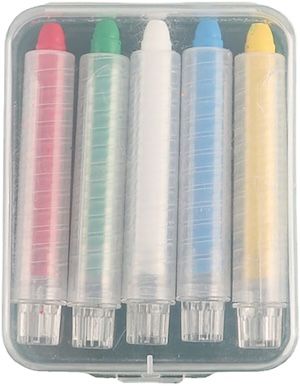
Clearly, this would fit the definition of a pencil. A language has two ways to address this ambiguity, stemming from two different assumptions:
-
If perceived reality is a cognitive bias, objective reality is the reality experienced in the state of mind, S, during deep meditation, which is similar to deep sleep[3]. In this case, the perceived reality is the physical manifestation of objective reality. Thus, a pencil is a physical manifestation of the abstraction that represents a pencil, similar to how we explain for ears[4]. This leads to characterizing plastic-covered chalk as a pencil as well.
-
If perceived reality is not a cognitive bias, it becomes objective reality. In this case, chalk covered in plastic may or may not be characterized as a pencil, like is the case with chalk. One might make the definition more specific, try to gain more context by discussing it with other people who use the language, or have reasons to coin another word for it or not, like spreading propaganda.
The first approach is common in computer science, where the definition of a pencil is similar to defining an API that is disconnected from its implementations. The second approach is common in natural languages such as English. We speculate that, in a language used to describe nature, the first approach leads to less noise because it stems from the assumption that perceived reality is a cognitive bias[5].
Thus, in this post, we observed how two ways of thinking about perceived reality change how we think about language.
[1] https://m-chaturvedi.github.io/blog/040/
[2] http://m-chaturvedi.github.io/blog/058/
[3] http://m-chaturvedi.github.io/blog/017/
[4] https://m-chaturvedi.github.io/blog/056/
[5] http://m-chaturvedi.github.io/blog/060/