In this post we discuss how the famous novel by Shrilal Shukla, Raag Darbari[1][2], correctly pointed out an aspect of the collective Indian subconscious regarding emigration. This was also pointed out to us, in their own way, by a very perceptive American businessman.
Raag Darbari is a subversive novel from 1968. It lays bare the soul of post-independence India, and we believe many of its observations are true even now. The only English-language novel that we’ve come across that comes close to its biting satire is Catch-22.
The author[3] was around 22 years old when India got its independence and later served in the Indian Civil Services, so he had a good idea of how the Indian psyche interacts with artifacts of the British system. The book is written from the perspective of a university-educated protagonist, Ranganath, who comes to his village for vacation and becomes increasingly frustrated by what’s going on there, and in the end decides to leave.
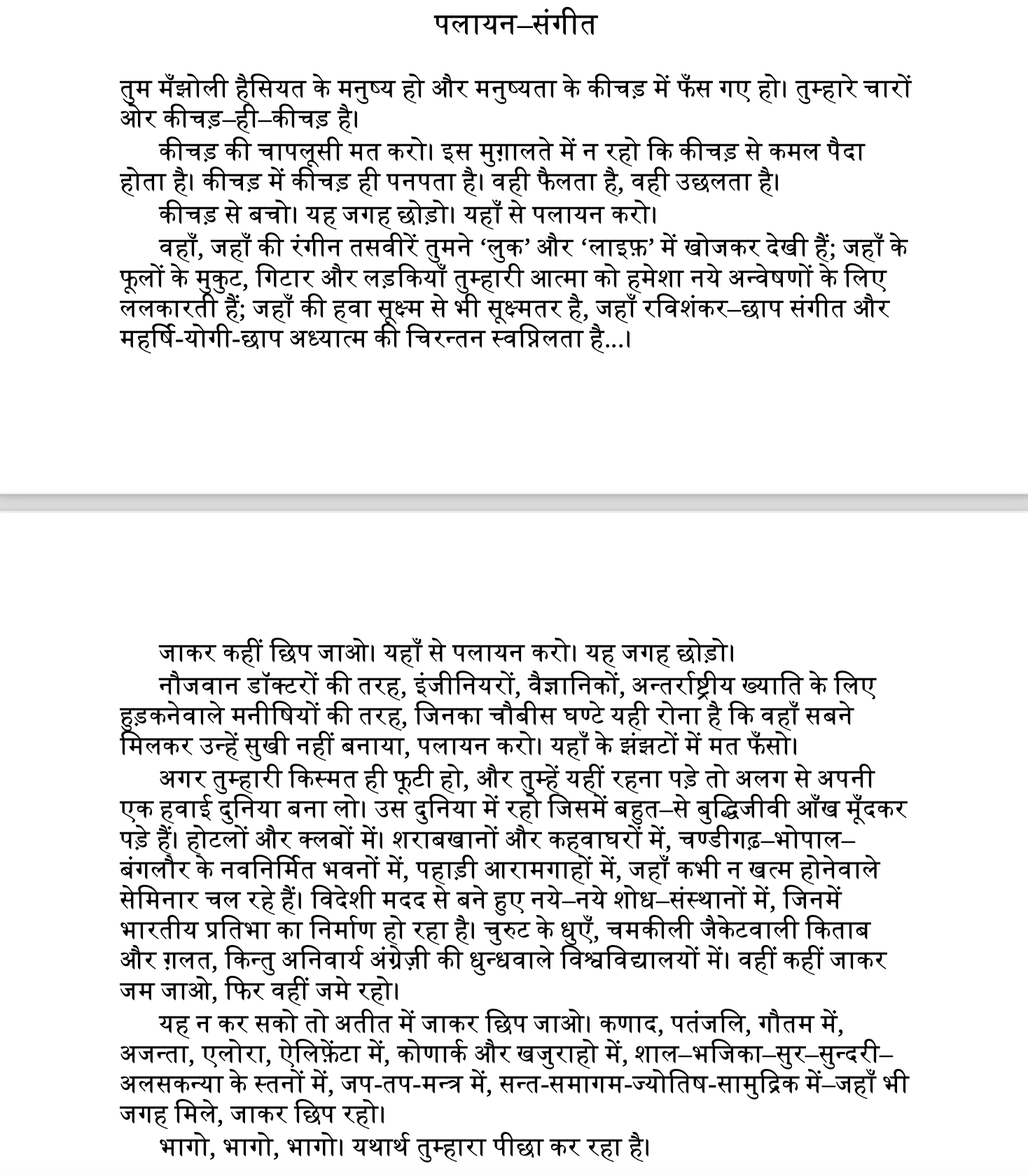
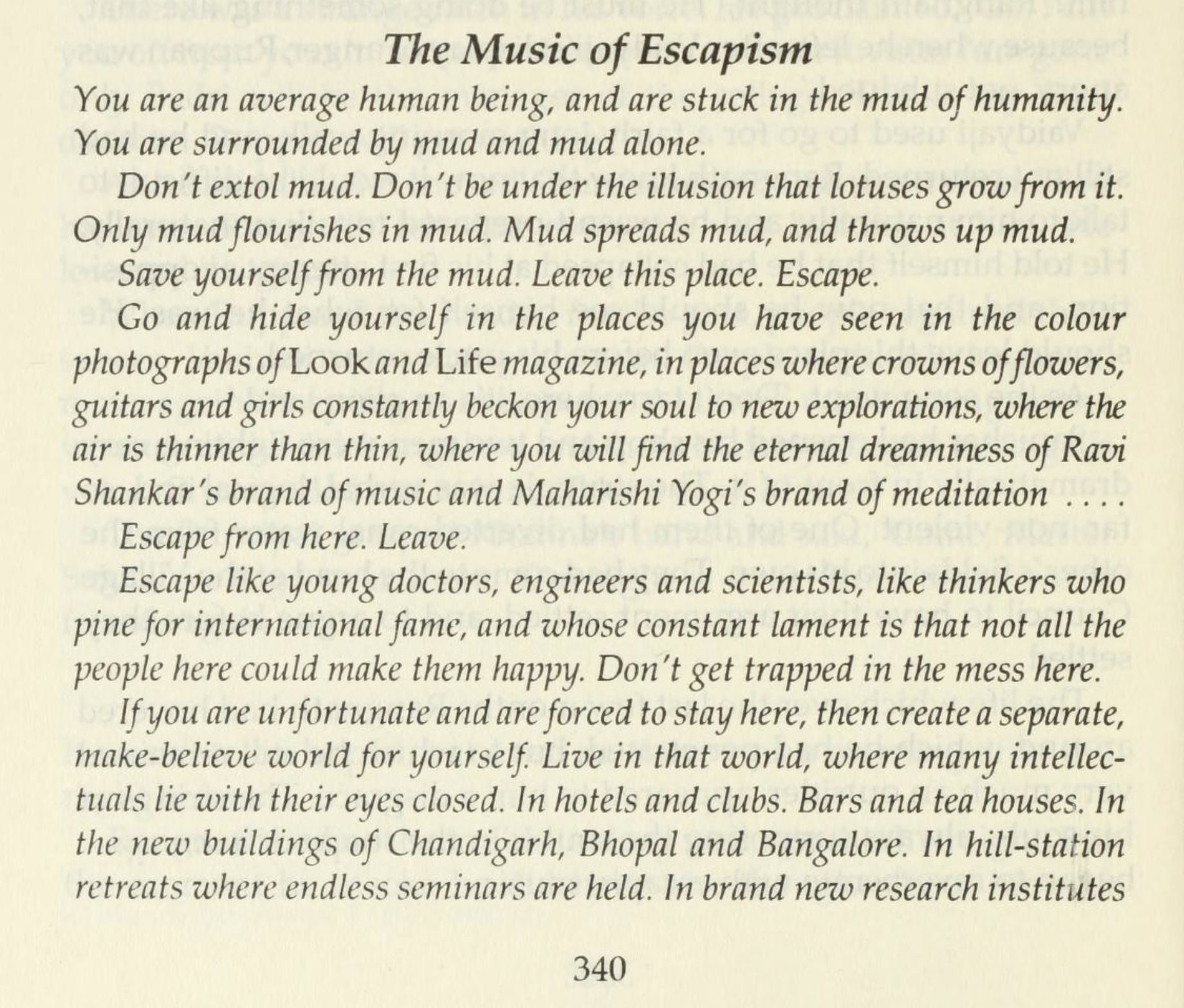
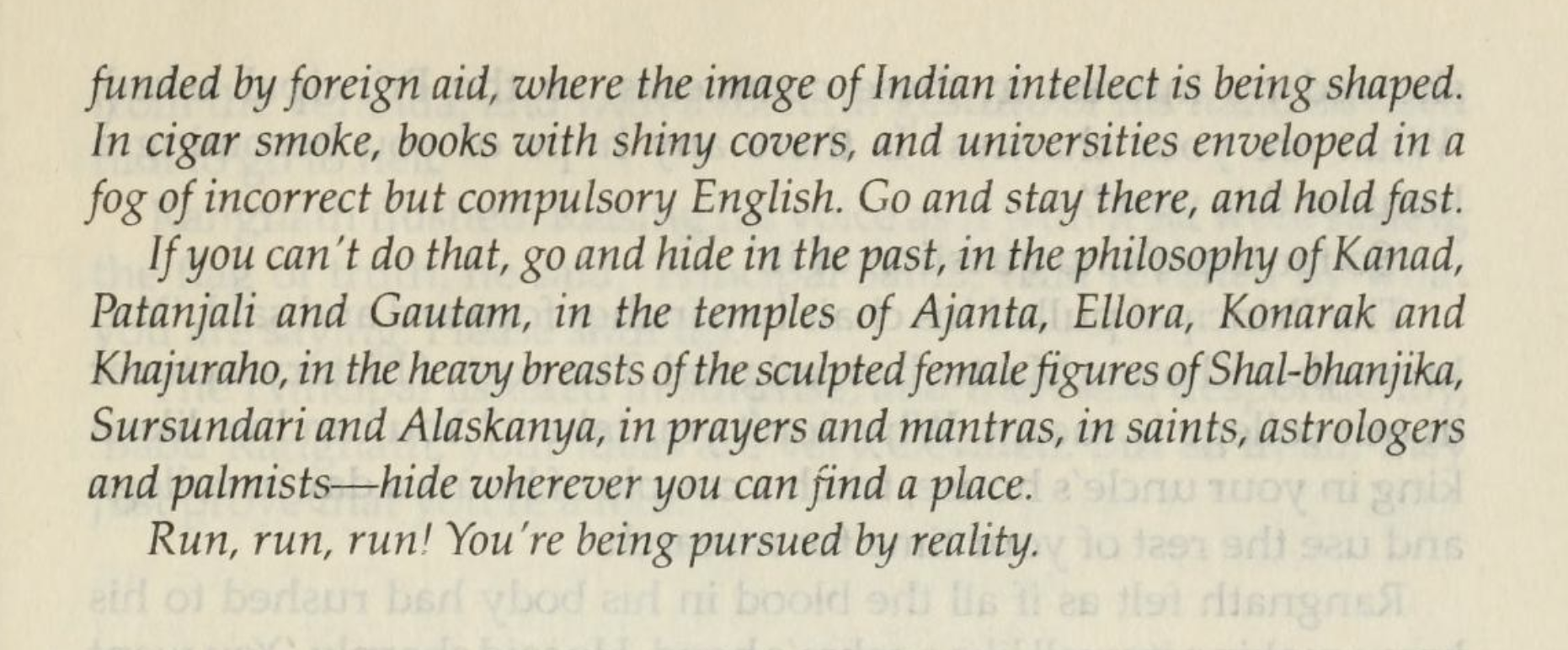
We have read the book more than once, the first time in 2005, and have realized over time that many of the thought patterns in the Indian psyche remain the same now as they were before. We would like to document a couple of excerpts that the frustrated protagonist notes at the end of the book regarding emigration. Much of this remains true even now, as far as the actions of Indians are concerned, but it is covered up with different facades such as higher education, etc. We first note the excerpts in the original Hindi, and then present the English translation by Gillian Wright. We would translate the title of the excerpt as “The Song of Emigration” and would observe that the translation doesn’t quite capture the causticness of the original Hindi.
[1] https://en.wikipedia.org/wiki/Raag_Darbari_(novel)
[2] https://archive.org/details/raagdarbarinovel00sukl/page/n9/mode/2up
[3] https://en.wikipedia.org/wiki/Shrilal_Shukla